
Bryan
DeLuca.
I sold socks on the internet before that was a business model. Now I am a co-founder and partner at FlightPlan Ventures, where we fund consumer brands and build them alongside the founders instead of billing them.
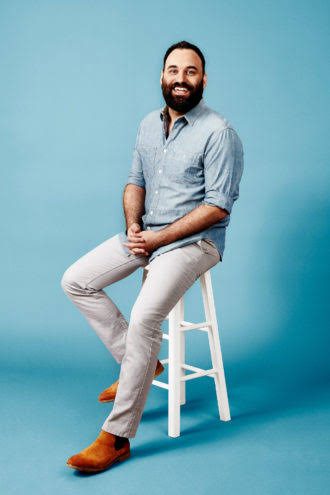
Bryan DeLuca is a Dallas-based brand strategist and product builder. He is a co-founder and partner at FlightPlan Ventures, where the team funds consumer brands and builds them from the inside. His own obsessions are brand narrative and the model underneath it: what a company stands for, how it talks, and the pro forma that says whether the story can carry a real P&L.
I pitched socks with no pants on. It worked.
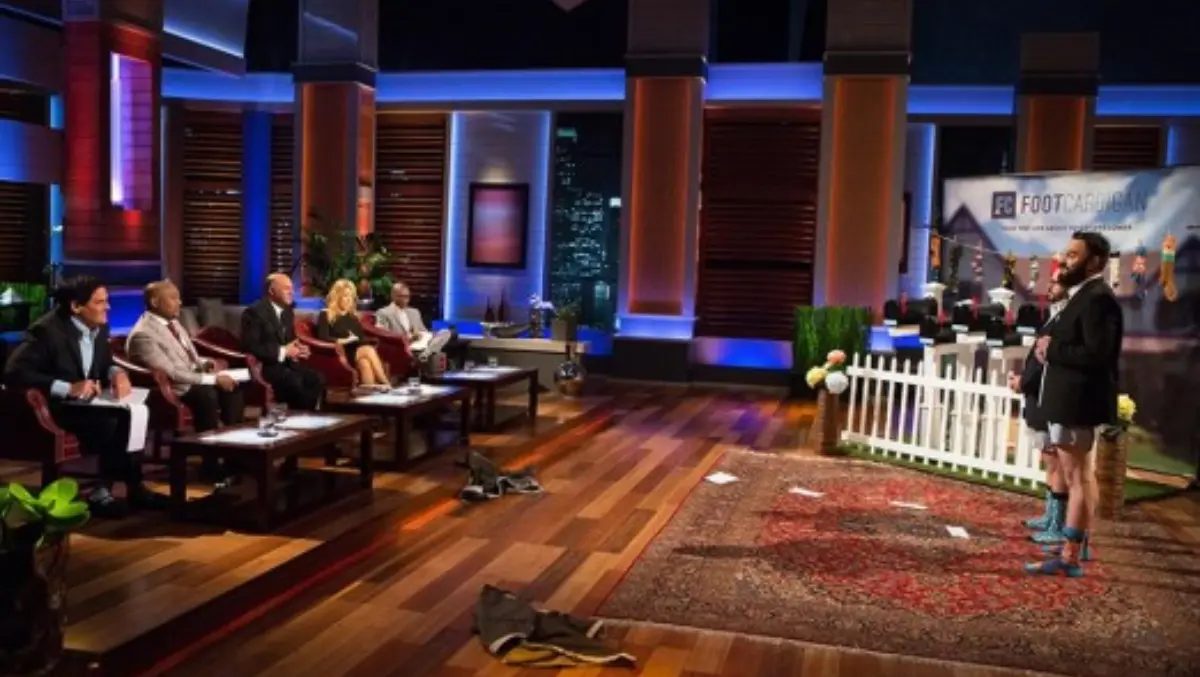
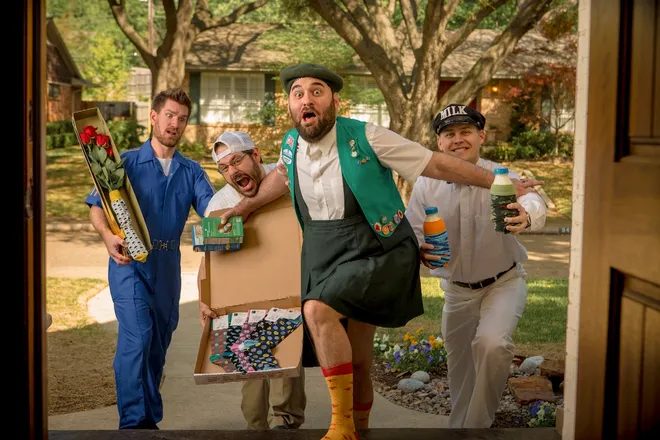
Foot Cardigan was one of the first sock subscription brands on the internet. There was no playbook. Nobody had written the churn benchmarks, the cost-of-goods math, or the retention curves we were trying to hit. We were making it up and shipping it monthly.
Then we took it to Shark Tank and I walked out on national television in a blazer and boxers, because the fastest way to explain a sock brand is to make people look at your feet.
That is the whole lesson, and I have been running it ever since. The product was a pair of socks. The business was the story people told about the socks.
Six brands built from zero since then. Four of them worked. The two that did not taught me more about founder quality than any of the wins did.
We were building the wrong thing first.
In 2021 Cameron and I went all in on a company called The Runway. It was a discovery platform, built to help people find and actually evaluate their next favorite brand online instead of guessing from an ad.
Then the ground moved. AI arrived hard and social commerce came in faster than anyone modeled. Discovery stopped being the bottleneck, because the algorithm was already doing it. What was missing was upstream: the founders had the taste and the product and no team, no capital and no system underneath them.
So we pivoted into the harder job. Instead of helping people discover brands, we build them, from the inside, next to the founder. FlightPlan is what The Runway turned into once we were honest about where the real gap was.
Brand instinct, and the math under it.
We are a studio, not a set of specialists for hire. Our team takes capital and a full operating bench into consumer brands and builds alongside the founder. The work I care most about is the brand and the model underneath it: positioning, narrative, story, and the pro forma that says whether the story can carry a real business.
Where I have the most reps. Apparel, accessories, footwear, collectibles, home. Anything with tooling, minimums and freight, where a positioning mistake costs you a warehouse instead of a slide.
I have scaled a licensed program to $15M a year. Attach the right brand to the right product and you inherit an audience instead of renting one. The skill is knowing which cultural moments have durable revenue behind them.
I build the pro forma, back-engineer it into the metrics that matter, then run forecast against actual every month. How that works.
The roadmaps, the monthly reviews, the hard conversations. We are accountable to the brands already in the portfolio, not just the ones we are courting. That is the part nobody puts in a pitch deck.
The company is named after the document.
Before we build anything, we build the FlightPlan. A real pro forma, back-engineered from the metrics that actually decide whether this brand becomes a business. Not a revenue hockey stick. Contribution margin, acquisition payback, inventory turns, the shape of the P&L twelve months out.
Then we fly it. Every month, forecast against actual, line by line. Where we are ahead we push. Where we are behind we find out why in weeks instead of quarters. AI is a big part of why that cycle is fast now: modeling, research and creative iteration that used to eat a month happen in days.
This is the difference between a studio and an agency, and it is not a philosophical one. An agency reports on activity. We own equity, so we report on the P&L. Same document the board sees, because we are on it.
Two questions. Both have to be yes.
I say no a lot, and not because I am precious about it. In physical product a bad yes costs eighteen months and a warehouse. So there are only two questions, and a maybe on either one is a no.
Here is the part founders hate to hear. Your product is a commodity. I do not care how good the formulation is, how clever the mechanism is, or how many months went into the sample. Someone can copy it, and if it sells, someone will.
What cannot be copied is the founder and the brand you build around them. Give me a commodity and a founder worth backing and I will build something people ask for by name. Give me a brilliant product and the wrong founder and I will give you back eighteen months.
Not do you have a good résumé. Can you make a call without me in the room. Do you bring me bad news in week one instead of month six. Will your team follow you through a quarter that hurts. I have passed on beautiful products attached to founders who could not do those three things, and I have never once regretted it.
Every product is a commodity, so this is not about whether yours is good. It is about whether there is a story worth telling around it. If someone hears about it once and cannot repeat why it exists, you do not have a brand, you have inventory. Then two more: is there margin left after freight and returns, and would anyone give it as a gift.
We decide what the brand actually is. Who it is for, what it stands for, how it talks, what it looks like on a shelf next to the competition. Plus the FlightPlan, so we know what we are aiming at before we spend a dollar.
We spend real money in small amounts to learn what a customer actually costs and what they are worth. Now the forecast stops being a guess borrowed from someone else's category and starts being your number.
A short list of things that happen weekly whether anyone feels like it or not. New creative, new tests, forecast against actual. It is unglamorous and repetitive, and that is exactly why most brands never do it.
Entrepreneurs build people. People build businesses.
The biggest mistake I see is founders trying to build the business directly. That is how you become the bottleneck of your own company and burn out somewhere in year three. Build the people instead. High autonomy, high responsibility, real ownership.
In physical product, a positioning mistake is not a slide you fix later. It is inventory you cannot move.
Retainers reward activity. Equity and revenue share reward outcomes. We only take the second kind.
We lean on AI harder than anyone we compete with, and it collapsed work that used to take months into a weekend. Eight people who own outcomes now out-ship sixty who own tasks.
06 / Straight answers
Consumer brands across the board. As a studio we build in food, beverage, wellness, beauty, apparel and home. The categories I know best are physical product: hard goods, soft goods, apparel, accessories, collectibles, anything with licensing potential. If you can wear it, collect it, gift it or hand it down, I have probably shipped it.
A real pro forma, back-engineered from the metrics that decide whether a brand becomes a business: contribution margin, acquisition payback, cohort repeat curves, inventory turns and the shape of the P&L twelve months out. Then we review forecast against actual every single month, line by line. The company is named after the document. An agency reports on activity. We hold equity, so we report on the P&L.
We bet on the jockey, not the horse, so it comes down to two questions. Would I get on a plane with this founder, and can a stranger explain the product back to me. Both have to be a clear yes. An exceptional product with a founder I do not trust is a no. A founder I would follow anywhere with a product nobody was waiting for is also a no. Most opportunities fail one of the two, and saying yes anyway is how you lose eighteen months.
That the product is rarely the hard part. We were one of the first sock subscription brands on the internet, before subscription commerce had a playbook anyone had written. We were solving retention, churn and cost of goods with no benchmarks to compare against. It taught me that a brand people find funny and tell their friends about is worth more than a better sock.
In 2021 we went all in on a discovery platform called The Runway, built to help people find and evaluate their next favorite brand online. Then AI arrived hard and social commerce accelerated, and discovery stopped being the bottleneck because the algorithm was already doing it. The real gap was upstream: early-stage founders with taste and product and no team, capital or system behind them. So we pivoted into co-building brands alongside those founders, and that became FlightPlan.
Because it is the fastest legitimate shortcut to demand in physical product. I have scaled a licensed program to $15M a year. When you attach a real brand to the right product you inherit the audience instead of buying it. The discipline is knowing which cultural moments have durable revenue behind them and which ones are gone in a quarter.
Falling in love with the product before the story. Every product is a commodity, no matter how good you think your formulation is, and in physical goods you commit real money to tooling, minimums and freight. A positioning mistake is not a slide you fix later, it is a warehouse you cannot empty. Get the story right and the product decisions get obvious.
An agency sells output and reports on activity. We are a studio: we hold equity and revenue share, so we report on the P&L instead. Every brand gets a pro forma, a monthly forecast-against-actual review, and an operating team inside the business. Our upside only exists if the brand works. I have also fired good-paying clients who were the wrong fit, because bad fit poisons a team faster than a slow quarter does.
Seven or eight people doing the work an agency of sixty used to do. We lean on AI harder than anyone we compete with, and it has collapsed work that used to take months into a weekend. Concepting, packaging comps, creative variants, modeling, research. The bottleneck moved from capacity to judgment, so the advantage is no longer headcount. It is systems, taste and speed.
Founders try to build the business directly, which is how you become the bottleneck of your own company. Build the people instead. High autonomy, high responsibility, real ownership, and the business gets built by people who care whether it works. It is also the only version of this that does not burn you out.
Relationships, almost entirely. Our network is our net worth, and nearly everything we see comes through someone we already know rather than cold outreach. Cameron does a lot of that groundwork. Once a brand is in the room we all get in it together, and there is a no jerks policy that is actually enforced.
Three phases. Foundation, roughly 120 days, where we build brand architecture, positioning and messaging. Benchmark, 45 to 60 days, where we test and establish real acquisition baselines instead of guessing. Then growth, which is weekly non-negotiables and relentless creative testing. Nobody skips phase one, no matter how badly they want to.
Dallas, Texas. We work with consumer brands anywhere in the US, but the relationships and most of the deal flow are rooted here.
Email me directly, or use the founder intake on the FlightPlan site. Tell me what you are building and be specific about where it is stuck. Vague notes get a slow reply, sharp ones get a call.
with you.
Nobody at FlightPlan is a specialist you rent for a phase. Between our team there is very little in a consumer household we have not shipped, from socks to supplements to boots to candy, and we bring all of it to whatever you are building. You keep the vision. We bring the twenty people it usually takes to make it real.